Canon Lenses for Crop-Sensor Bodies: Real-World Reviews of Kit and Wide-Angle Lenses
Translated from the Korean original. Read the original →
Over the years I've bought and sold more lenses than I can count.
I'm no expert, so this is just one amateur's take on the different Canon lenses and how they actually were to use.
Canon Lenses, Part 1: Kit Lenses
My history with Canon lenses starts around 2007, with the old kit lens that came with the Canon 400D when I first got into DSLRs.
Over the past ten years or so, Canon has released four different 18-55mm kit lenses ([1]).
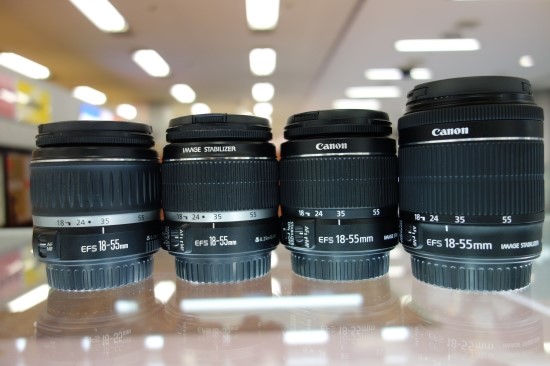
From left: 18-55 II, 18-55 IS, 18-55 IS II, 18-55 IS STM
The one on the far left is the first lens I ever used. I kept it for seven years and finally sold it about a year ago for around 30,000 won.
If you want to get into photography properly, you should really buy the body and lens separately, but most beginners who don't know much or don't have any photographer friends around just end up buying the body-and-lens kit. I used nothing but that kit lens for almost five years myself...
For hobbyists like me, it's actually pretty hard to ditch the kit lens and move on to something else, mostly because you don't really feel the need to. The way to break through that wall is to force yourself to mount a different lens, and the most effective ones are a wide-angle around 10mm, or any lens, whatever the focal length, that opens up to F1.8 or brighter. Shoot at 10–12mm and you'll think, "Wait, why have I been stuck with such a cramped view all this time? This is a whole new world." Shoot at around F1.8 and you'll think, "Oh, so this is what background blur looks like."
And after that, I can pretty much guarantee most people sell off the kit lens and start buying one lens after another... (-_-;)
I've actually used all four of the kit lenses above. The 18-55mm II on the far left is pretty much obsolete by now. The next one, the 18-55mm IS (second from left), added image stabilization and noticeably better image quality. The 18-55mm IS II that followed (third from left) didn't feel much different from the 18-55mm IS. But the latest one, the 18-55mm IS STM (far right), is honestly a monster in terms of value for money. The image quality isn't quite prime-lens level, but in practice it feels really good. It has a powerful STM motor that focuses fast and silently, it covers the standard 18-55mm zoom range, and above all it goes for only about 80,000 won used, which is a huge plus. Still, the variable aperture (F3.5-5.6) and the need for other focal lengths eventually push you to drop the kit lens anyway. One warning: when you buy a new camera in Yongsan (Seoul's big electronics market) or online, some sellers pair a current body like the 700D or 100D with an older lens like the 18-55 IS, so be careful. The kit lenses all look alike, so beginners fall for this easily. The older lenses on the left have a silver ring around the barrel, which makes them easy to tell apart. The two newer ones look almost identical, but the exact name is printed on the front of the lens, so just check it carefully. By the way, Canon names its lenses in this order: "focal length, aperture, image stabilization (IS) or not, motor type." So with the 55-250 F3.5-5.6 IS STM, for example, you can tell at a glance that it's a 55-250mm lens with an F3.5-5.6 aperture, image stabilization (IS), and an STM motor.
Canon Lenses, Part 2: Wide-Angle Lenses
I escaped the kit lens with a wide-angle from Sigma, the Sigma 10mm-20mm F4-5.6 EX DC HSM. Sure, the aperture is still variable and even a bit slower, but it opens up a whole new world of "angle of view and distortion." Honestly, given what you usually shoot with a wide-angle, a slow, variable aperture doesn't seem to matter much.
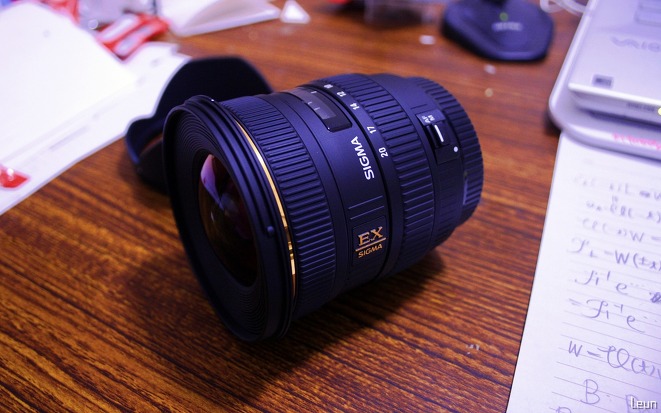
Sigma 10-20mm F4-5.6 EX DC HSM
Later Sigma also released a 10-20mm with a constant F3.5 aperture, but with an ultra-wide a constant aperture doesn't mean all that much, so I don't think it's worth paying an extra 100,000–150,000 won for it. I bought this lens by mail order from a used camera shop in Japan, and I remember being surprised by how big and heavy it was when it first arrived. After that it was the only lens I carried around, until I dropped it on the Seoul City Wall trail in Seongbuk-dong in 2014, and that was the end of it. For a while after that I was hooked on fast primes and barely shot wide at all, but living around Jongno, there were just too many narrow alleys I couldn't capture without a wide-angle, so I ended up buying the Tokina 11-16mm F2.8 DX II.
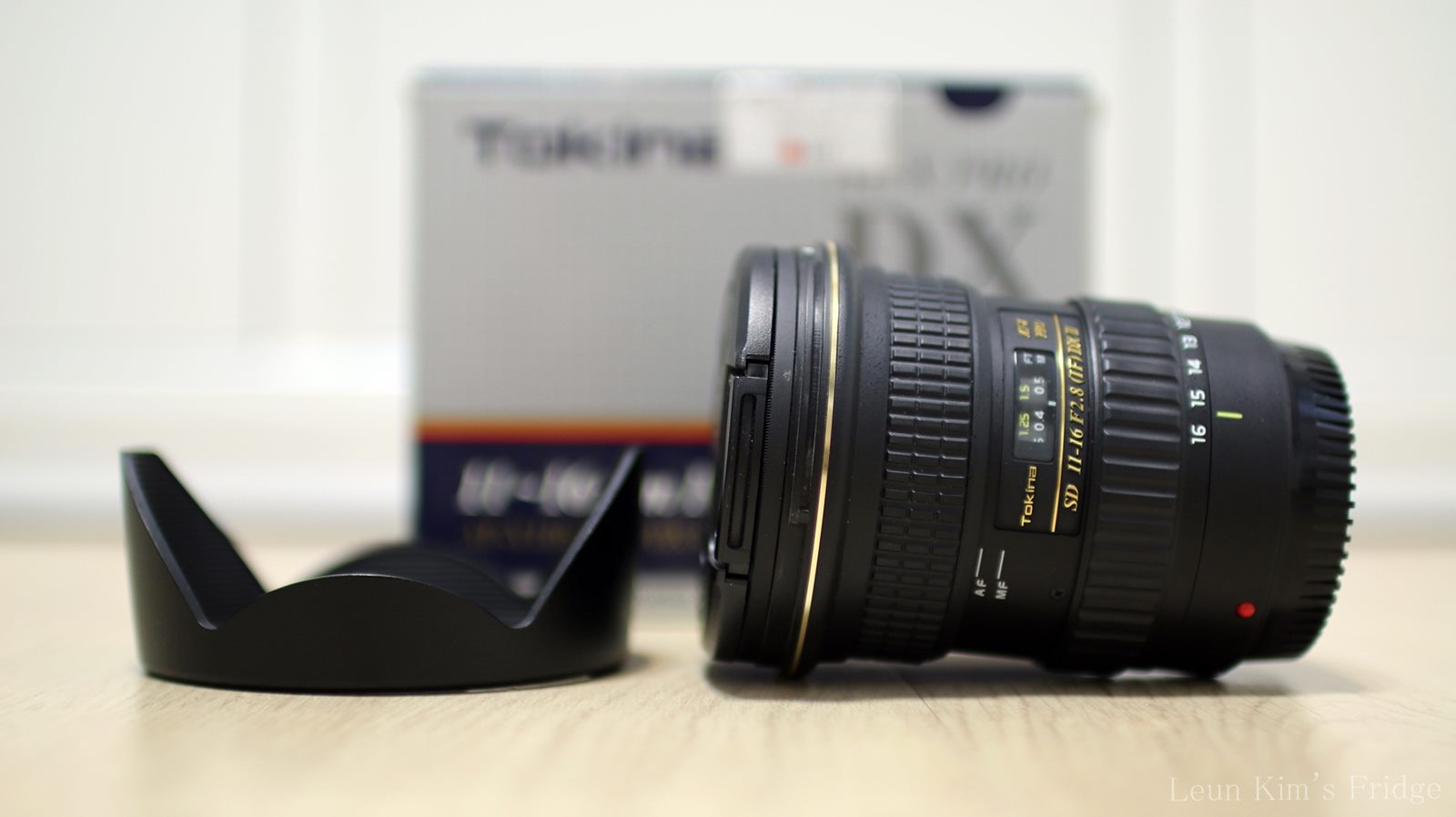
Tokina 11-16mm F2.8 DX II
I still have the Tokina in the photo above, but I don't use it that often. It's one of those lenses I don't really need but would hate to sell. There's even a saying among crop-sensor shooters that "for wide-angle, it's got to be Tokina," and compared with Canon's own lenses it's outstanding value for money. It isn't all that different from the Sigma wide-angle, but when you stop down for things like night scenes, its sunstars are much prettier.
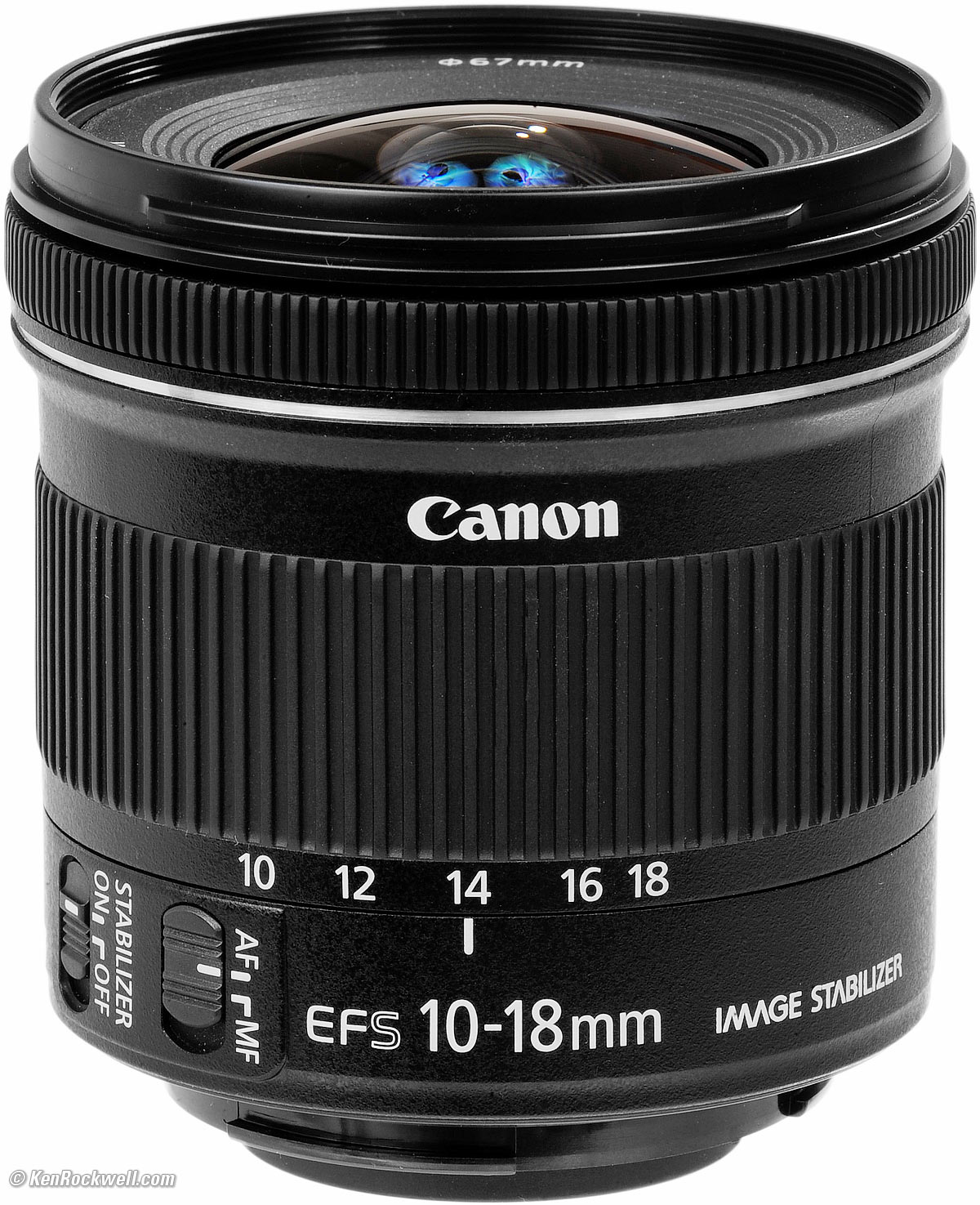
Canon 10-18mm F4.5-5.6 IS STM
I also used the recently released Canon 10-18mm F4.5-5.6 IS STM for about a week before selling it. In daylight it isn't much different from the Sigma or Tokina wide-angles, but you'll feel it struggling quite a bit at night. You can get one for an amazing price in the 200,000-won range, so for sheer value it's easily the best. On top of that it has an STM motor and is light, so for video it seems to be in a class of its own. The Canon 10-22mm F3.5-4.5 USM does have a brighter aperture, but it came out in 2005, so that's nearly ten-year-old technology. Optics may age more slowly than other tech, but it can't keep up with recent models (especially in image quality, which is a bit subjective here, but I mean sharpness and how soft the corners get). For the same reason I'm not a big fan of the 17-55mm F2.8 IS USM from 2006 either, the one Korean users call Canon's "blessed lens." In actual use, I don't think its image quality even matches today's cheaper third-party lenses (Sigma, Tamron, etc.) with similar focal lengths.
I'll go into more detail when I get the chance, in my next post, "Canon-Mount Lenses (Crop Body) and Reviews from Real Use: Standard Zooms and Primes"...
Kit lens image source:
[1] http://blog.naver.com/bba0924/220123834641
More in Camera & Lens
See all- Sigma 18-35mm F1.8 "UFO Lens" Review: What It's Really Like to Use(1)
- Canon 50mm F1.8 "Nifty Fifty" Lens Review
- Canon Lenses for Crop-Sensor Bodies: Real-World Reviews of Kit and Wide-Angle Lenses
- Yanghwa Bridge Café with a View: COFFINE GURUNARU on the Han River, Seoul
- Sigma 30mm Art: A Must-Have Lens (Bugak Skyway to Jangwi-dong, Seoul)
Comments 0