Osaka University Graduate School of Science (Mathematics) Entrance Exam: My Experience
Translated from the Korean original. Read the original →
August 28: Gimpo -> Osaka
Caught the 9 a.m. direct flight to Osaka. From the airport I took a shuttle bus to Itami Airport and checked into the place I'd booked near there. After unpacking, I headed into central Osaka to the city's biggest bookstore and picked up a bunch of math books. Then it was back to my room to study my summary notes and the books.
When I turned on the TV, there was a food show where Japanese celebrities were visiting Hong Seok-cheon's gay bar in Itaewon and eating his dishes. It was fun, so I watched for a bit and went to bed at midnight.
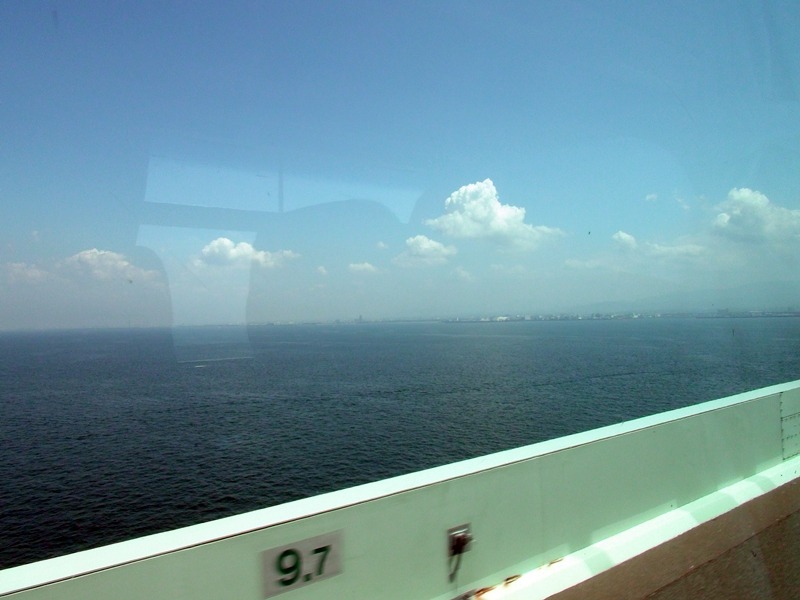
On the way to Itami Airport 1
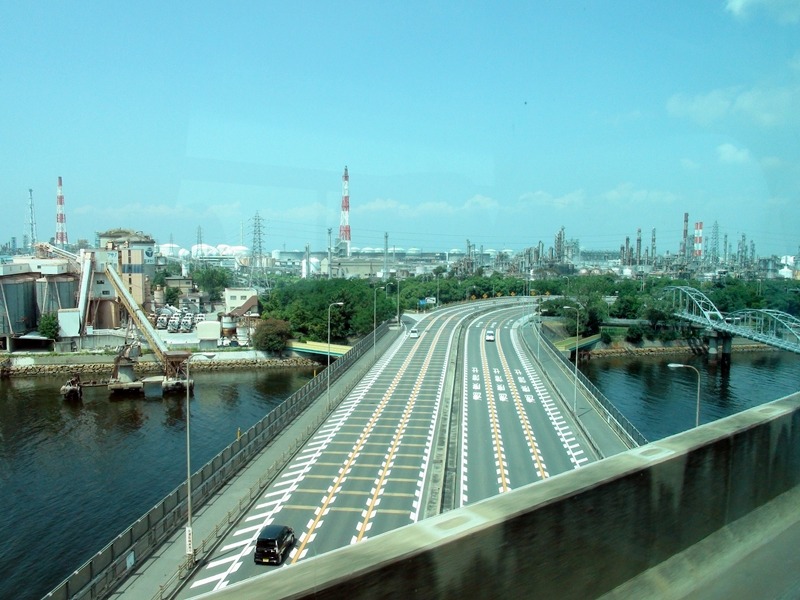
On the way to Itami Airport 2
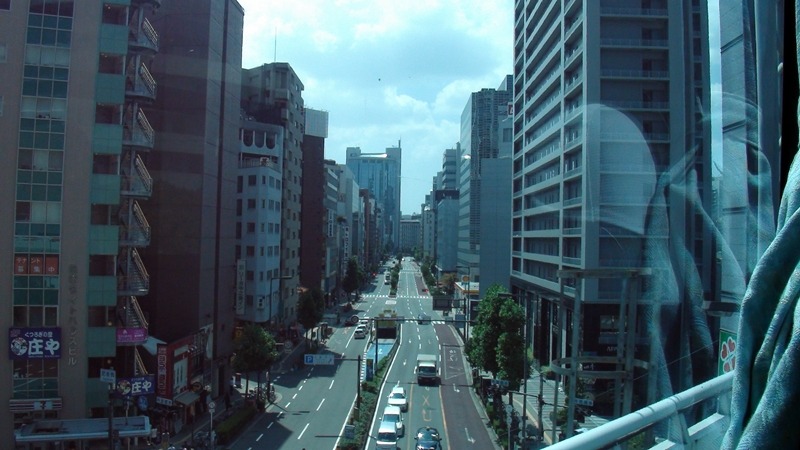
On the way to Itami Airport 3
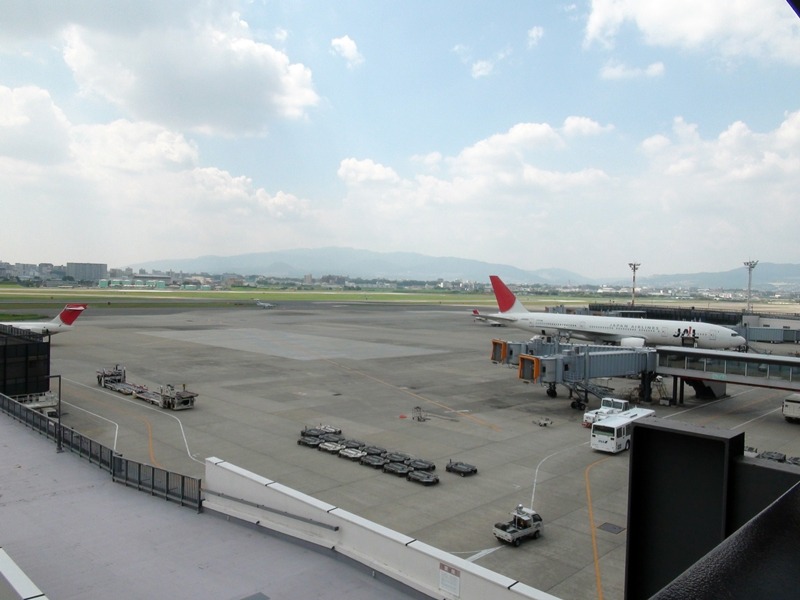
The rooftop observation deck at Itami Airport
August 29: Written exam day
Just like last time, I got up at 6 a.m., about three hours before the exam. Osaka University's School of Science is close to the airport, so I left around 7 and got there around 8. Again I took a stroll around the campus, sightseeing a little, and walked into the exam room at 8:30. Having been through it once already at Tohoku, I was a lot less nervous.
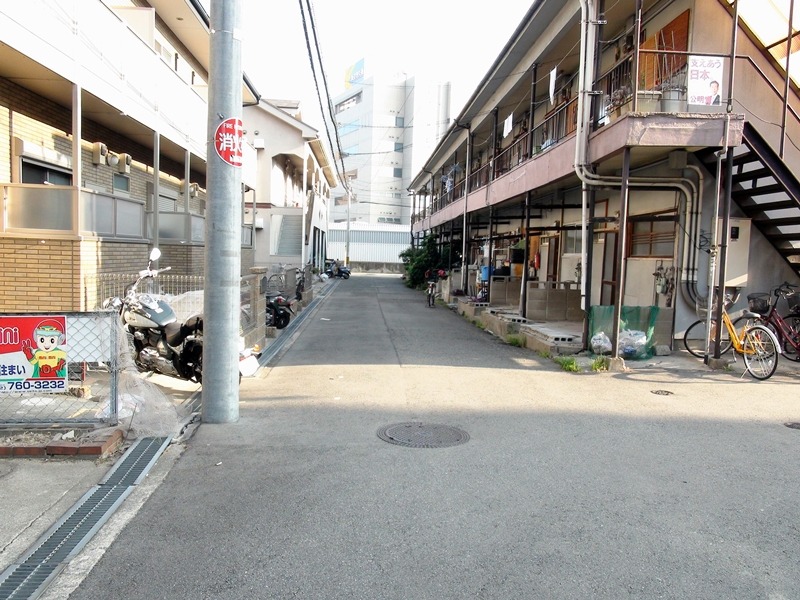
Heading to the written exam
The written exam has three parts: the core subjects (one problem each in linear algebra, analysis, topology and set theory, and complex analysis), the specialized subjects (pick any two of three problems), and finally an English exam (translating mathematical text from Japanese -> English and from English -> Japanese).
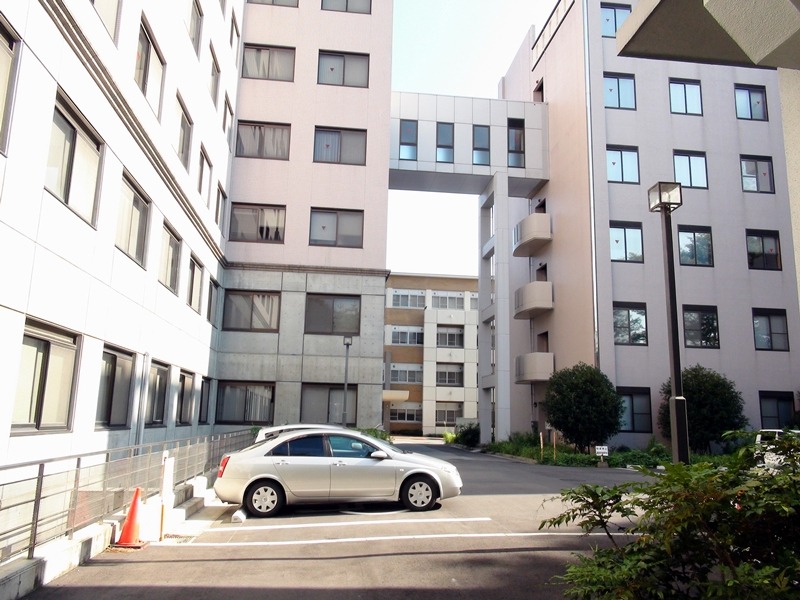
Osaka University campus 1
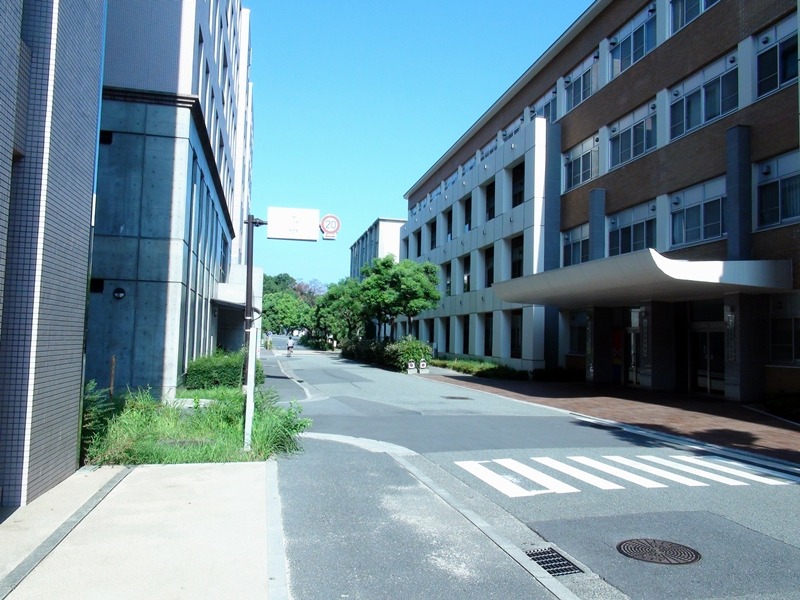
Osaka University campus 2
The core-subject exam started first, at 9 a.m. For the core subjects you have to answer every problem.
- Problem review -
Problem 1: An analysis problem about sequences. (1) asks you to prove that if a_n goes to 0, then \lim (1+a_n)^n goes to 1. The binomial theorem gives a quick answer. (2) is just a calculation, and (3) uses the earlier results and in the end turns into computing the integral of e^{-cx^2}.
Problem 2: (1) is just computing eigenvalues and eigenvectors, and for (2) you only need to write it out using (1). (3) asks for the dimensions of the image and kernel of a certain map, again just a calculation, and (4) builds on (3).
Problem 3: (1) and (2) ask you to prove whether a function on a certain topological space is continuous or not under various conditions. (3) asks you to prove whether the set {1/n, n: natural number} U {0} is compact in R, and (4) asks you to prove that the set from (3) is not compact under a different topology.
Problem 4: A straightforward problem computing the integral of 1/(1+z^5). (1) and (2) are natural steps toward the final integral in (3).
The core-subject exam went more smoothly than I expected.
Lunch break was again from 12 to 1. This time I ate a melon bread from a convenience store on a park bench and went over interchanging limits and integrals for the Lebesgue integral in real analysis one more time. The elective exam started at 1. At Osaka University you choose any two of the specialized subjects (algebra, real analysis, manifolds). Of course I had no real choice: algebra and real analysis. I started the exam praying, "Please, just give me basic group, ring and field problems."
Problem review
Problem 1: Luckily, it was closer to linear algebra than abstract algebra. (1) is again just a calculation, and (2) asks you to prove that two groups are isomorphic. I answered (3) and (4), but I'm not sure about them.
Problem 2: A manifolds problem, so I skipped it.
Problem 3: Real analysis. Sure enough, it was about the Lebesgue integral. (1) asks you to show that a certain infinite series is Lebesgue integrable by swapping the sum and the integral with the Monotone Convergence Theorem. (2) also uses the Monotone Convergence Theorem to show that a function is Lebesgue integrable; it's the function from (1) slightly modified. (3) asks you to prove that the limit of a certain function is 0 almost everywhere, but I wasn't sure about my answer.
Again, the English exam started around 4 p.m. Having done it once before really helped. Still, the English exam was considerably harder than Tohoku's, and there was even a passage that had nothing to do with math. Once again, the hard part wasn't the English but the Japanese.
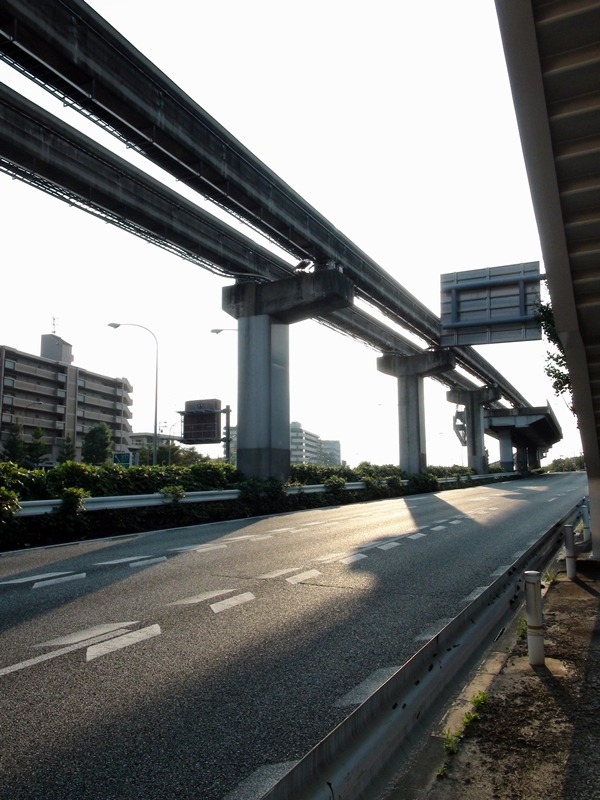
Heading back to my room after the written exam
August 30: Interview day
At 12 p.m., the list of candidates who qualified for the interview was posted at the entrance of the graduate school's math building. My exam number was on it, and I breathed a sigh of relief. About 60% of all the applicants made the list. I checked it several times, and the interviews started at 1 p.m. At Osaka University's graduate school, each interview is strictly 30 minutes.
So as not to repeat what happened at Tohoku, I went in having analyzed every written exam problem. But contrary to what I expected, I didn't get a single question about the written exam.
When I walked into the interview room, there were again six professors, with one who looked like the department head sitting in the middle. Like before, it was a format where you solve problems on a big blackboard. They fired off questions about basic definitions in analysis and algebra. Since we study math from English textbooks in Korea, I'd gotten used to the English phrasing, and they pointed out the word order in how I stated definitions (I probably said things in strange Japanese). They also pointed out that communication wasn't going very smoothly. I couldn't solve as many problems as the Japanese students, and I walked out feeling a bit uneasy......
But the result turned out better than I expected.
Results
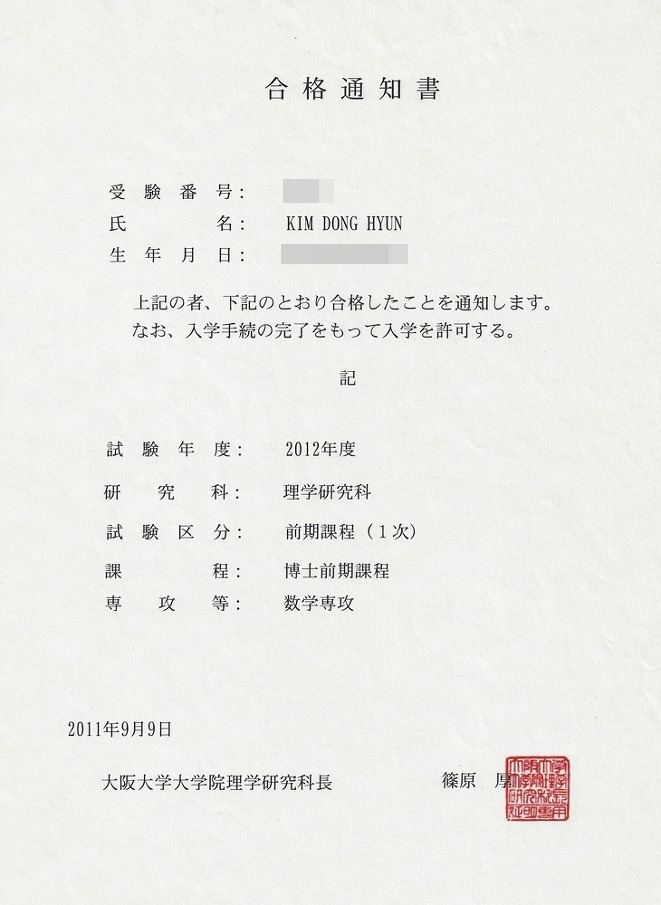
1st round (written exam): Passed
2nd round (interview): Passed

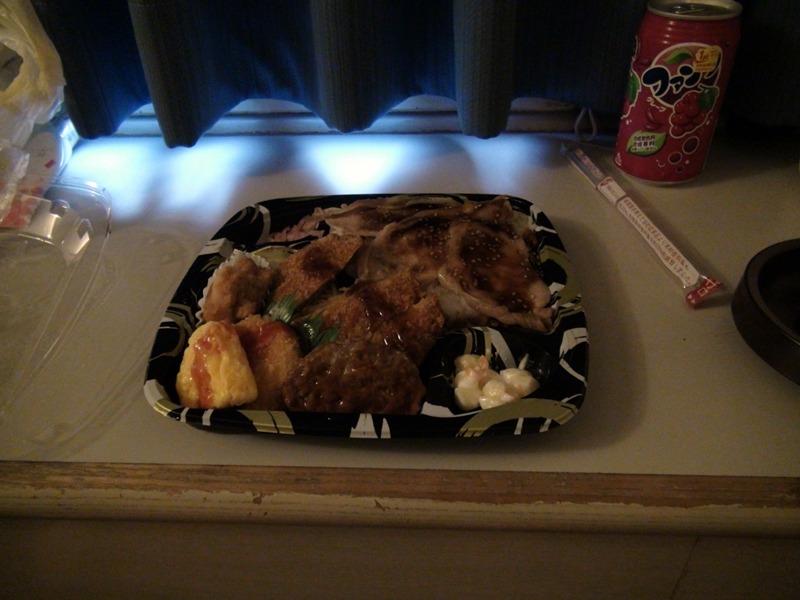
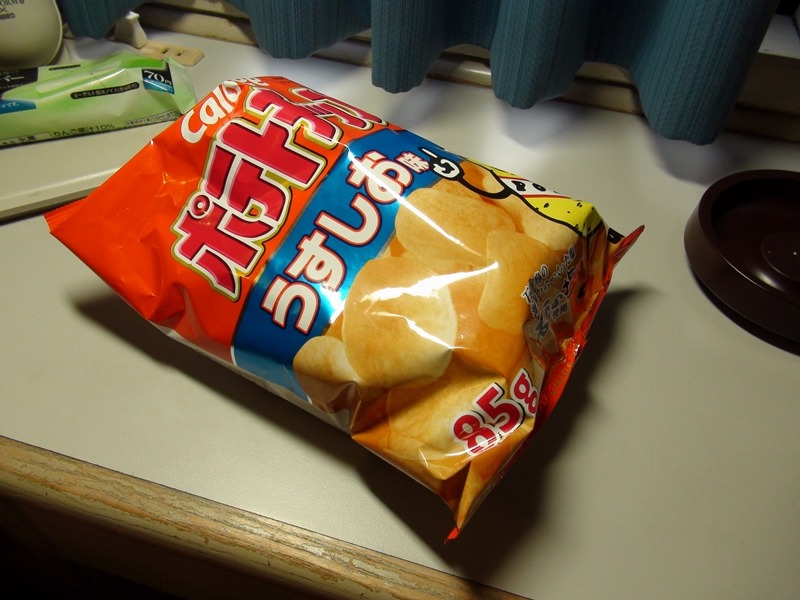
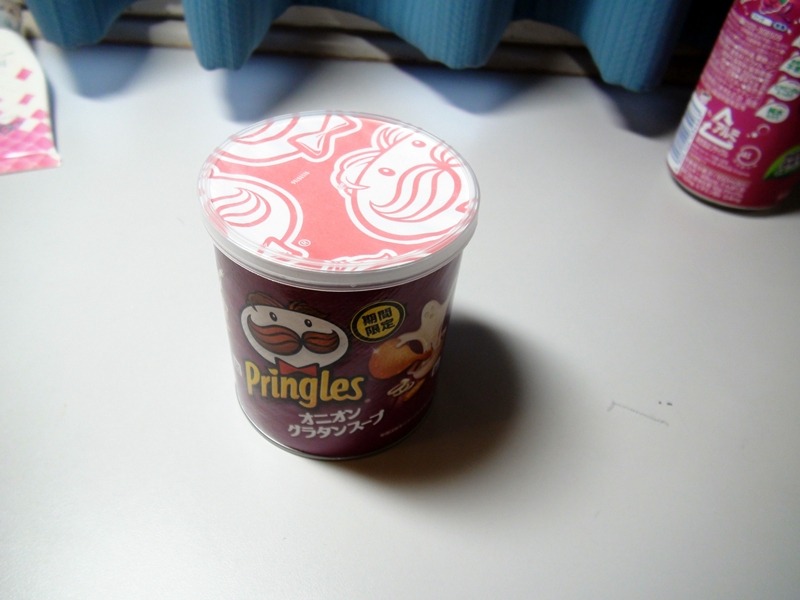
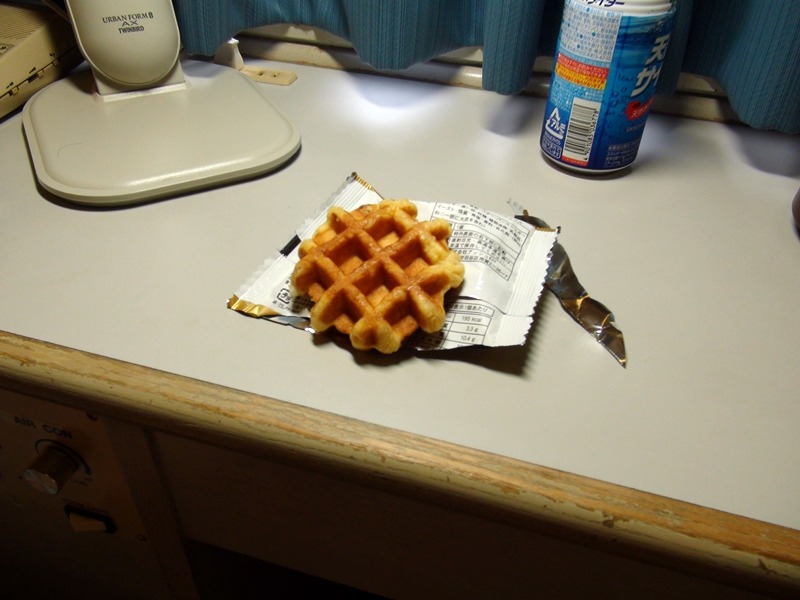
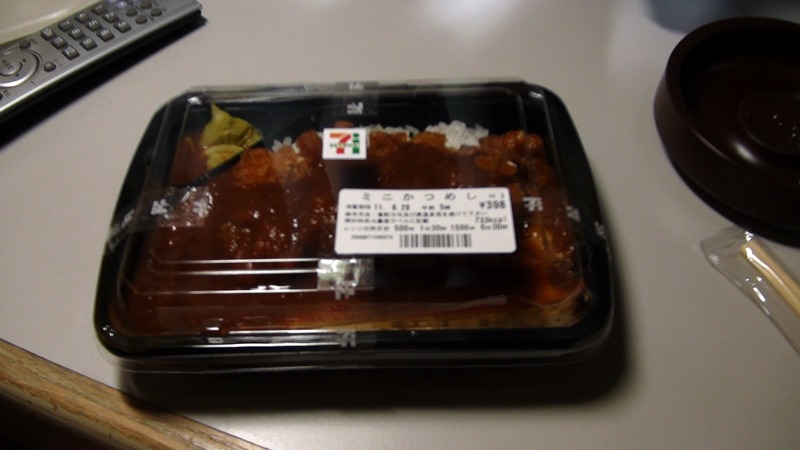
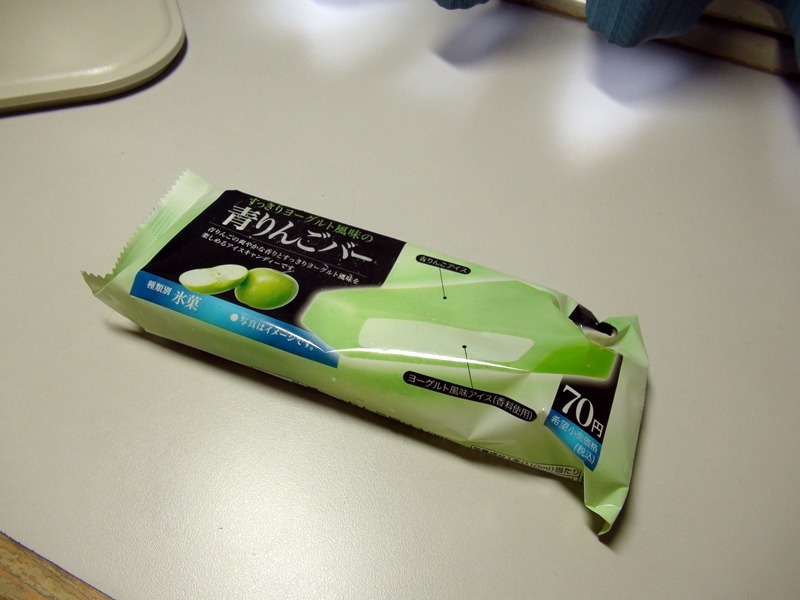
What I ate...
- My Osaka University Graduate School of Science entrance exam
- My Tohoku University Graduate School of Science entrance exam
- My University of Tokyo and Kyoto University Graduate School of Science entrance exams
More in MS Entrance Exam
See all- My Kyoto University Graduate Math Interview Experience [Grad School in Japan](4)
- Graduate School in Japan: Q&A on Contacting Professors, University Rankings and Japanese Skills(6)
- Applying to Grad School in Math at the University of Tokyo and Kyoto University: My Entrance Exam Experience (Graduate School of Science)(4)
- Tohoku University Graduate School of Science Entrance Exam (Mathematics): My Experience
- Osaka University Graduate School of Science (Mathematics) Entrance Exam: My Experience(20)
Comments 20
축하드립니다~ 저도 공대 쪽인데,,, 현재 일본대학원을 준비 하고 있는데,,, 부럽습니다..ㅠ
감사합니다. 꼭 성공하시길 바래요
우와! 일본가는거여?
오킹 일본으론 학회 안오냥~ 독수공방할듯한데 놀러왕 ㅠ
잘 못 봤다는 투로 말하는데 둘 다 합격이라니요 너무하잖아요 ㅠ 그리고 일본가나요, 부럽네요. 저는 일본은 커녕 제 집에서 제일 멀리 간 게 경주이 있는 건데요. 그것도 초등학교 5학년 떄 수학여행으로 ㅋㅋ
제가 약 6년 후에 대학원 시험을 받아야 하는데 그 때 제가 잘 할 수 있을지 모르겠네요. 지금도 적어도 적분의 정의나 여러가지 적분문제들을 풀어봐서 적분에 대해서는 어느정도 하고 있는데 문제는 measure theory를 하고 꽤 긴 시간이 지나버렸네요. 테크닉들은 아직 기억나긴 하지만 6년 후에도 기억날 지 불안하네요 ㅠ [해석학을 더 공부하다 보면 써 먹을 때가 있을 지도 특히 함수해석에서 많이 쓰던데요. Haar measure때문에 정수론에서도 써먹을 때가 있고]중간에 RCA를 한 번 더 봐야 하나요.
ㅎㅎ 고등학생이신데 RCA를 독파하셨다니 놀라움을 금할 수 없습니다. 대학원 시험은 뭐 대학교3년때부터 준비하셔도 충분해요~ 저는 전자공학 전공에다 준비도 늦게 시작해서 애좀 먹었습니다만ㅎㅎ 이제부터라도 한우물만 파면 언젠간 웃을 날이 올거라는 믿음으로 버티고 있습니당
그런가요 ㅎ 미래 일을 제가 너무 걱정하는 것 같네요. 이제 열심히 나아가야죠. [참고로 RCA를 하는데 엄청 힘들었습니다. 문제 하나 푸는데 하나에 1시간 걸리는 것은 기본이고 2시간 걸려도 못 푸는 것도 있었고 ㅠ 14단원은 그야말로 Hell이었고. 겨우겨우 읽었어요. 하루에 한 3시간정도 해서 3개월 반정도나 걸리고.]
대학원 입학 시험이셨군요.. 궁금한게 선형대수나 미적분에 관한 부분... 일본어로 된 책을 보고 싶은데요. 공부하시는데 도움 받은 일본어로 된 책이 있다면 추천 좀 부탁드릴게요.
저도 일본 대학에서 비슷한 시험을 볼것 같아서요.
네, 演習大学院入試問題〈数学〉I 를 한 번 봐보세요. 저는 개인적으로 굉장히 도움이 되었습니다. 계산이 약간 지루했던 걸로 기억하지만 지금까지 출제된 대학원 수학 입시 유형이 거의 다 풀이되어 있습니다. 시간이 되면 일본에 큰 서점을 방문하시는 것도 좋습니다. 수학 코너에 가면 대학원 입시 대비 문제집이 엄청 많거든요. ㅎㅎ
http://www.amazon.co.jp/%E6%BC%94%E7%BF%92%E5%A4%A7%E5%AD%A6%E9%99%A2%E5%85%A5%E8%A9%A6%E5%95%8F%E9%A1%8C%E3%80%88%E6%95%B0%E5%AD%A6%E3%80%89I-%E5%A7%AB%E9%87%8E-%E4%BF%8A%E4%B8%80/dp/4781908373
확인이 늦었습니다. 감사합니다.
올해 오사카 대학 수험하는 학생입니다.
다름이 아니라 면접시험 당시에 대해 질문 하고 싶은게 있어서요.
2년 전이시라 가물가물 하실지도 모르겠지만 면접 시험때 교수들 앞에서 문제를 받고 바로 풀어내는 식이었나요 아니면 미리 풀 시간이 주어지나요? 알려주시면 정말 감사드립니다 :D
안녕하세요, 저희 학교에 수험 하신다니 반갑습니다! 면접 당시에는 굉장히 엄격했기 때문에 아직도 생생하네요. 들어가서 이름 말하고 수험번호 말하자 마자 교수들이 문제를 입으로 출제합니다. 가령 "임의의 N차 복소정사각행렬의 고유치는 어떻게 나타나나요?" 라는 식으로 질문 받으면 칠판에 그걸 바로 풀이하는 식이었습니다. 문제를 빨리 풀면 질문받는 문제 수도 많아져서 그만큼 점수를 많이 따기 때문에 유리하겠죠. 원하는 대학에 꼭 합격하시기 바랍니다!
빠른 답변 감사합니다!! 저는 경제학부 수험할 거라서 면접때 아마 미적분이나 벡터에서 물어보지 않을까 예상하고 있는데.. 흠.. 그자리에서 바로 풀어내야 한다는 점에서 조금 걱정이네요!!
제가 수학적 사고는 금방 해내지 못하는 사람이라 ㅎㅎ 그래도 오사카 대학 '아카홍'을 보니 그렇게 어려운 정도는 아니라서 아마 그정도 난이도를 예상하고 있습니다. 혹시 모르니 더 어려운 문제도 풀어볼 계획이구요!! 또, 물어보는 문제가 하나가 아니었다는 점에서 굉장히 놀랐습니다. Leun님 말씀대로 빨리 풀어서 많이 풀면 더 좋겠네요.. 마지막으로 문제 풀떄 교수님에게 설명하는 식으로 풀어내는 것인지 궁금합니다.
아, 경제학부시군요 헤헤, 과 마다 면접 형태는 많이 차이가 나서 뭐 어떨지는 잘 모르겠습니다. 저는 이학연구과 수학과 기준으로 말씀드린 거고요. 네, 문제를 풀 때는 교수들에게 설명도 해 줘야 합니다. 면접이라는 것 자체를 일종의 '교수들 납득/설득 시키기' 로 이해하시면 될 것 같습니다. 그럼 행운을 빌겠습니다!
자세한 설명 정말 감사합니다. 주변에 오사카 대학 수험한 사람이 없어서 정보가 부족했거든요... 꼭 합격해서 번거롭지 않으시다면 한번 찾아 뵙겠습니다. 감사합니다~!!
네 감사합니다, 만날 수 있길 바래요 ^^
레은님!! 혹시 오사카 대학 수험하실 때 숙소 예약은 어떻게 하셨습니까?
25일 시험당일이라 24일 칸사이 국제공항에 도착해서 오사카 대학 근처 숙소를 알아봐야하는데..
살면서 한번도 숙소예약같은걸 안해본데다가 예약장소가 외국이다 보니 뭐가뭔지 모르겠네요ㅠㅠ
경제학부라 시험은 토요나카 캠퍼스에서 치룰 것 같습니다. 조언을 구하고 싶습니다.
코멘트 감사합니다! 숙소 예약은 저같은 경우 항상 ヤフートラベル를 이용합니다. 여기서 예약을 하고 나서 가면 훨씬 저렴한 가격에 묵을 수 있기 때문에요. 가령 24일 토요나카 근처 숙소를 검색해 보면 이런 식 으로 공실이 나옵니다. 여기서 예약하고 종이 뽑아가면 됩니다. 돈은 보통 현장에서 지불하고요. 물론 야후Japan 아이디가 필요합니다. 저 같은 경우 수험당시 이타미공항 근처의 A.P Hotel 라는 곳을 이용했었습니다.
레은님~!! 언제나 상세하게 답변을 달아주셔서 정말 감사합니다. 링크까지 달아주실줄은 ㅠㅠ 정말 많은 도움이 되었습니다. 감사합니다!! 또 궁금한 점 있으면 물어봐도 되죠? ㅎㅎ
네 감사합니다. 물론입니다, 하지만 만족할만한 답변을 기대하셔서는 안됩니다 헤헤.