Applying to Grad School in Math at the University of Tokyo and Kyoto University: My Entrance Exam Experience (Graduate School of Science)
Translated from the Korean original. Read the original →
With my last exam on February 8, I'm finally done with all of my grad school applications. It's been a really tough road. Let me start with the results:
University of Tokyo Graduate School: rejected at the document screening
Kyoto University Graduate School: international student admission, most likely rejected
I really wanted to get into Kyoto, so this one hurts. I bombed the algebra and geometry parts of the interview, so I don't think I made it. This year I applied to four schools in total. First came the summer entrance exams at Tohoku University and Osaka University, where I took the regular exam (the same conditions as Japanese students). I just missed out at Tohoku, but I got into Osaka by some miracle and breathed a huge sigh of relief. After that I was swamped with my electrical engineering capstone project, and then this winter I applied to my first and second choices, the University of Tokyo and Kyoto University. In the end, I came up short at both.
At the University of Tokyo's math department, international students can't take the regular exam. They're selected on paperwork alone (you send things like language certificates in English and Japanese, any books you've published, and your papers). At Kyoto you can choose between the regular exam and the international student track, but I missed the application deadline for the regular exam, so that wasn't an option. Sadly, through all these grad school exams I didn't see a single other Korean applicant. Oddly enough, though, there were always a few blue-eyed Western students at every exam. Here are a few tips for Korean students thinking about grad school in Japan.
1. As far as I could find, there are no study-abroad agencies in Korea that help with applying to graduate programs in Japan. There are plenty for the US, but I guess there just isn't enough demand for Japan. A few places handle applications for research student (kenkyusei) positions, but that isn't a regular graduate program. So you have to do everything yourself: the exam schedule, the documents, the application forms, all of it (doing this alone almost wore me out..). If you email the administrative office of each department, they'll get back to you with detailed answers.
2. Grad school entrance exams are usually held in the summer. If you're planning to study in Japan, I recommend preparing steadily from your third year of college. In my case I couldn't read Japanese at all even in my fourth year, so I lost a lot of time studying the language. You should also put real effort into the Japanese vocabulary for your own field.
3. Grad school admissions in Japan are pretty competitive. It's not unusual for undergrads to fail to get into the master's program at their own university. If you're aiming for one of the former Imperial Universities, I recommend working through the many exam prep books published in Japan. They helped me a lot.
4. Before your interview, make sure you go over the problems from your written exam.
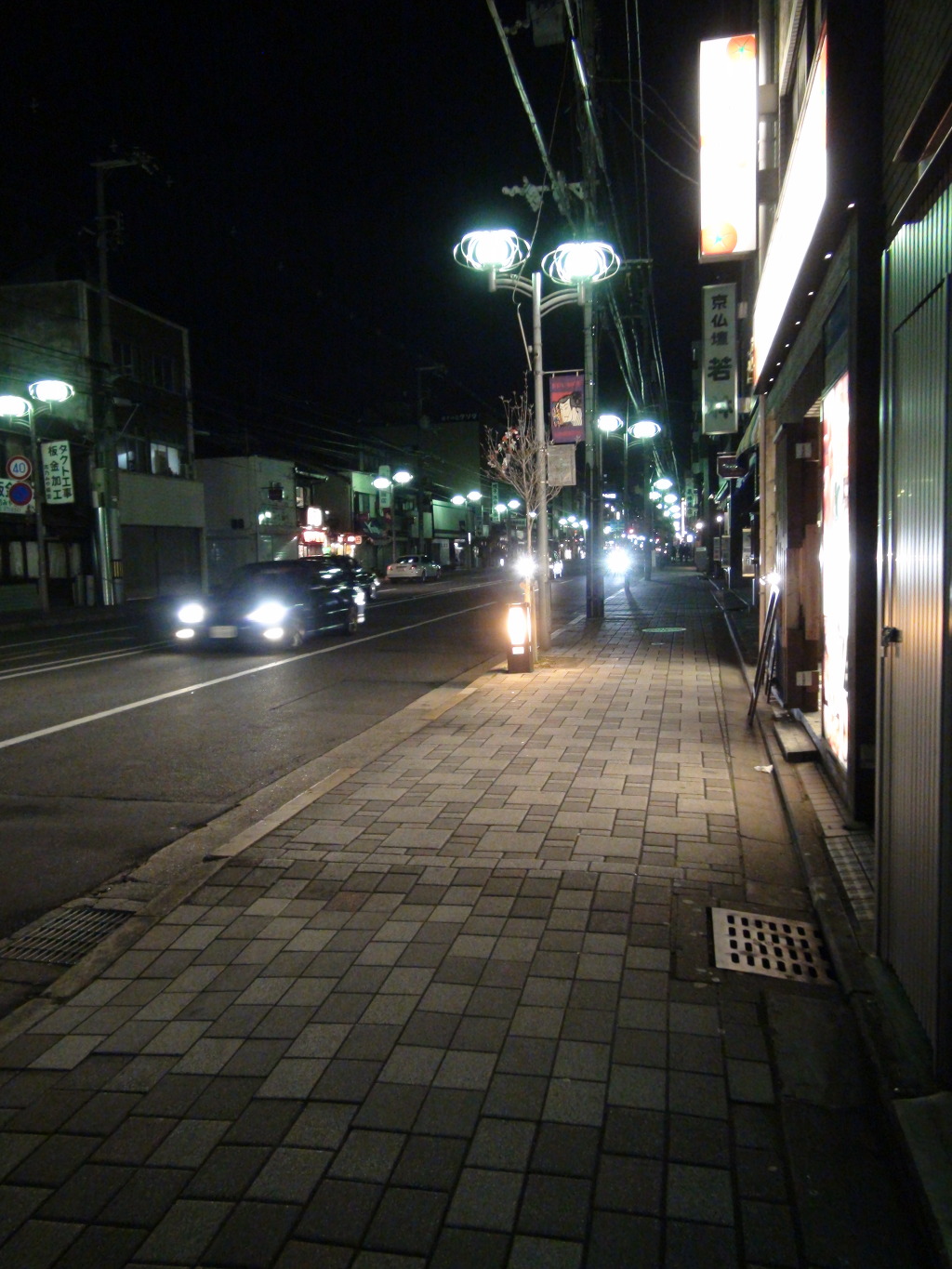
The street outside where I stayed, near Kyoto Station
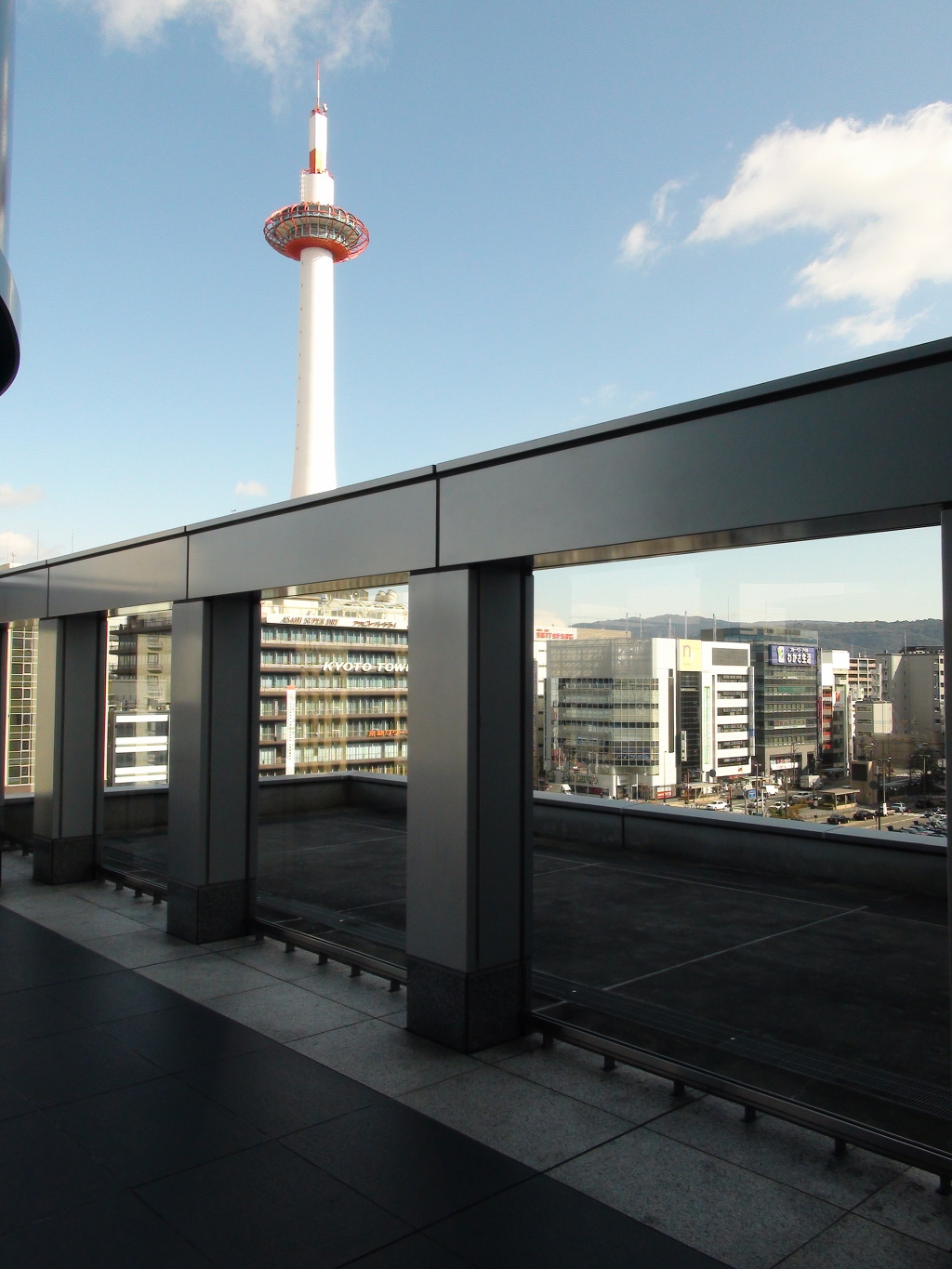
Kyoto Tower
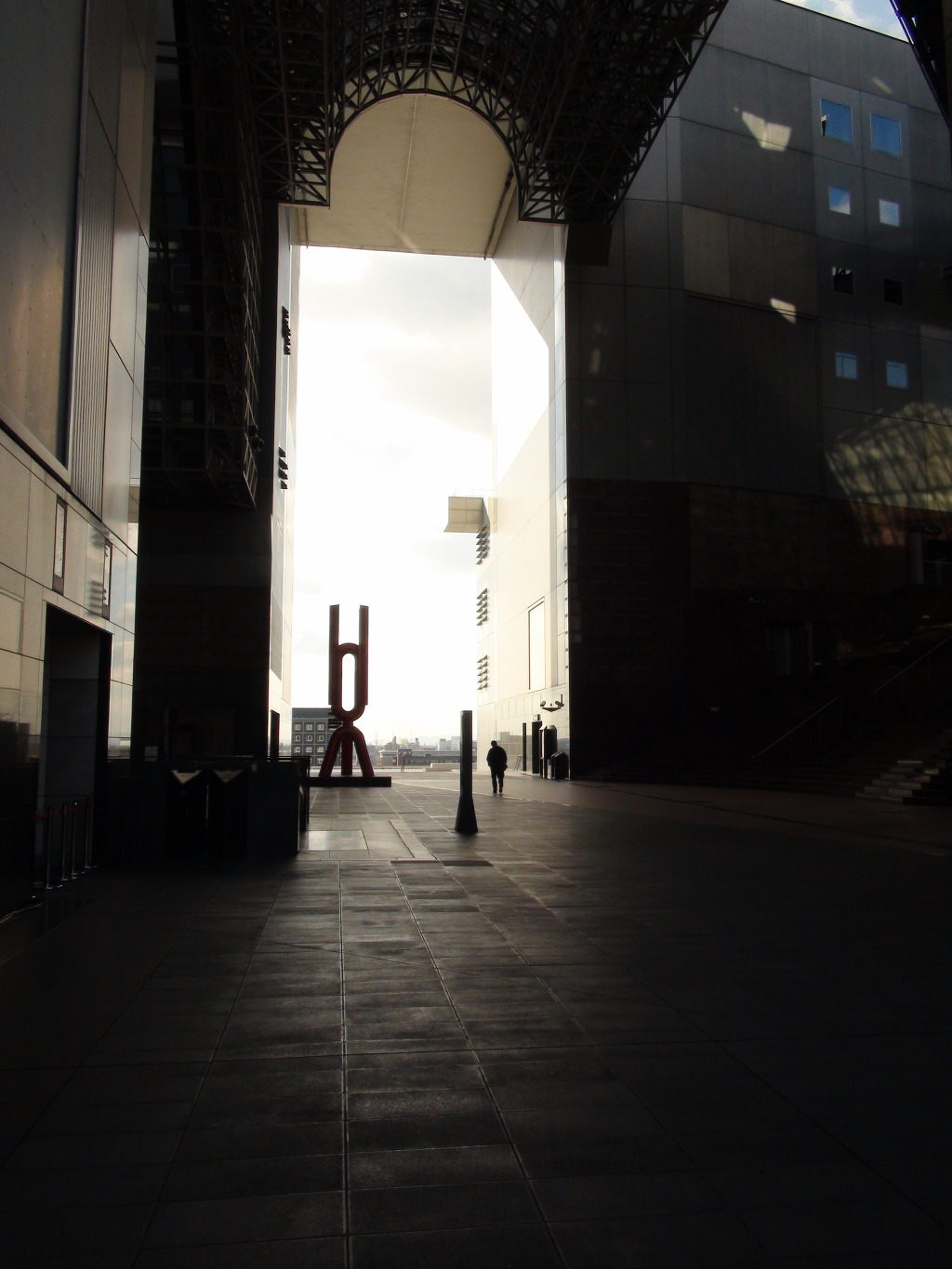
Kyoto Station
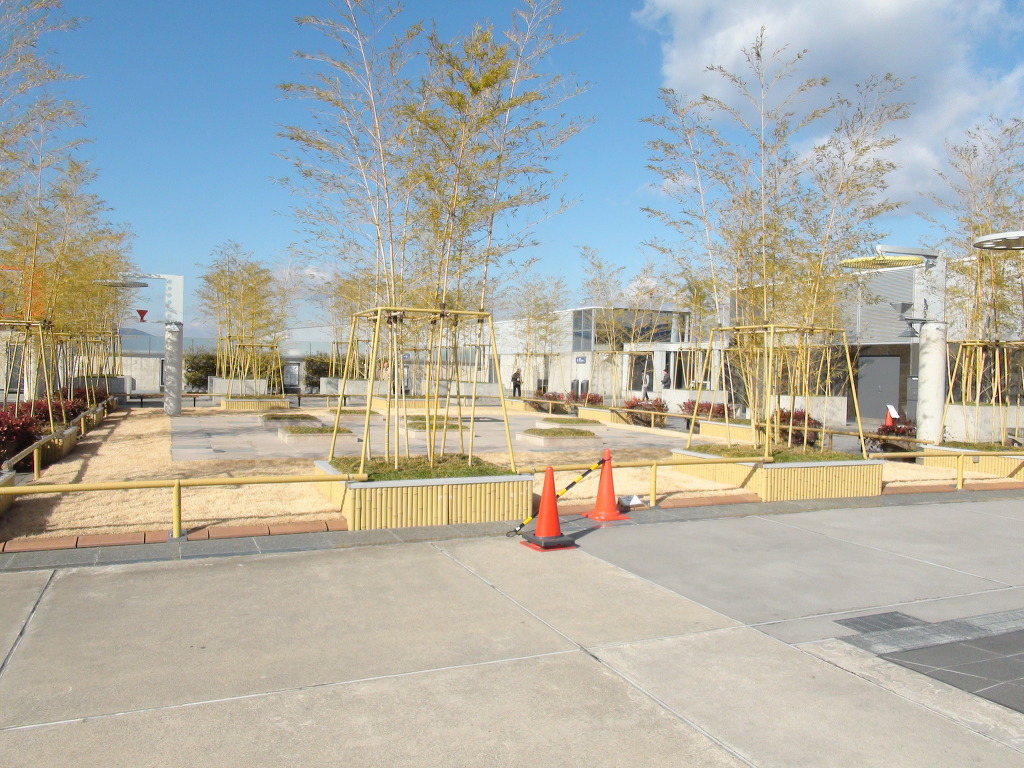
A garden inside Kyoto Station
Books I used to prepare for the grad school exams
1. Textbooks from my undergrad courses
You-Feng Lin, Set Theory
J.W.Brown, Complex Variables and Applications
Manfred Stoll, Introduction to Real Analysis
Michael Henle, Modern Geometries
Gilbert Strang, Introduction to Linear Algebra
John B. Fraleigh, A First Course in Abstract Algebra
J.E.Marsden, Vector Calculus
H. Royden, Real Analysis
P.M.Fitzpatrick, Advanced Calculus
M.P.do Carmo, Differential Geometry of Curves and Surfaces
Plus various lecture notes
2. Other books I read carefully
Herb Silverman, Complex Variables
Arai Hitoshi, ルベーグ積分講義 (Lectures on Lebesgue Integration)
Stephen H. Friedberg, Linear Algebra
A.M.Mood, Introduction to the Theory of Statistics
Fisher, Stephen, Complex Variables
Saiensu-sha, 演習大学院入試問題(数学)1 (Graduate School Entrance Exam Problems in Mathematics, Vol. 1)
Saiensu-sha, 演習大学院入試問題(数学)2 (Vol. 2)
University of Tokyo Press, 解析演習 (Exercises in Analysis)
University of Tokyo Press, 解析開論
数学英和事典 (English-Japanese Dictionary of Mathematics)
Kodansha, 集合と位相 そのまま使える答えの書き方 (Sets and Topology: How to Write Answers You Can Use As-Is)
3. Books I just skimmed
Kim Eung-tae & Park Seung-an, Modern Algebra
Kim Ju-pil, Algebra Made Easy
Kim Seong-gi, Introduction to Analysis
Yuma Ju, Linear Algebra Theory and Applications
Schaum's Outlines, Differential Equations
数学演習ライブラリ7: 集合・位相演習 (Math Exercise Library 7: Exercises in Sets and Topology)
数学演習ライブラリ2: 解析演習 (Math Exercise Library 2: Exercises in Analysis)
数学演習ライブラリ5: 代数演習 (Math Exercise Library 5: Exercises in Algebra)
大学数学の入門 集合と位相 (Introduction to University Mathematics: Sets and Topology)
- My grad school exams at the University of Tokyo and Kyoto University (Graduate School of Science)
- My grad school exam at Osaka University (Graduate School of Science)
- My grad school exam at Tohoku University (Graduate School of Science)
More in MS Entrance Exam
See all- My Kyoto University Graduate Math Interview Experience [Grad School in Japan](4)
- Graduate School in Japan: Q&A on Contacting Professors, University Rankings and Japanese Skills(6)
- Applying to Grad School in Math at the University of Tokyo and Kyoto University: My Entrance Exam Experience (Graduate School of Science)(4)
- Tohoku University Graduate School of Science Entrance Exam (Mathematics): My Experience
- Osaka University Graduate School of Science (Mathematics) Entrance Exam: My Experience(20)
Comments 4
생각했던 것보다 훨씬 더 어려워 보이네요. 저도 확률과정을 전공으로 하려고 해서 일본으로의 유학도 생각해보고 있었는데... 거시기하네요.
네 ㅎㅎ 모두 제가 부족한 때문입니다 ㅠㅠ 그런데 당연 해석쪽으로 가실 줄 알았는데 확률로 가신다니 뜻밖이네요~
오사카 대학도 꽤 괜찮은 것 같아요. 물론 동경대 라고 하면 왠지 멋있고 한국에 더 인지도가 있지만... 지진이나 그런 문제 등으로 보면...일본내 3위권내의 국립대학인 오사카에서 공부하는 것도 나쁘지 않다고 생각합니다.
네 감사합니다. 꼭 원하는 대학에 합격하시길 기원합니다 ^^