Graduate PDE Textbook Reviews: Partial Differential Equations Books I've Read
Translated from the Korean original. Read the original →
I thought this would be a good time to review some of the PDE textbooks I've read or come across so far. I'm nowhere near the level where I could properly judge a book, so please take these as nothing more than my personal impressions.
1. F. John. Partial Differential Equations. Springer.
Written by F. John, a student of Courant. It seems like a good introduction to PDEs. It starts with problems in just a few variables, and the second half covers the Laplace equation, hyperbolic equations, elliptic equations, and parabolic equations.
2. Lawrence C. Evans. Partial Differential Equations. AMS.
One of the books in the GSM series, and an extremely widely read one. It's thick, but in exchange it's fairly easy to read. My only gripe is the notation: I usually write D = (\partial_t, \partial_1, \cdots, \partial_n), but here it's D = (\partial_1, \cdots, \partial_n), so it felt a little off at first. For that I use \nabla = (\partial_1, \cdots, \partial_n). I haven't gone through it line by line, but I have a rough idea of what's where, so these days I use it like a dictionary.
3. R. Racke. Lectures on Nonlinear Evolution Equations. Vieweg.
A book by R. Racke, a student of R. Leis. I'm currently using it for my M1 (first-year master's) seminar. You can think of it as a more detailed walk-through of S. Klainerman's papers. It's split into two main parts. Roughly the first half explains, step by step, everything needed to prove the global existence theorem for general nonlinear wave equations. The second half then applies the same method, briefly, to the elasticity equation, the heat equation, the thermoelasticity equations, the Schrödinger equation, the Klein-Gordon equation, Maxwell's equations, and the plate equation, giving a good outline for each. If you're specializing in wave equations, it's a book I'd personally recommend. That said, I got the feeling that the author never actually checked the tedious calculations and just worked them out roughly in his head before writing them down. For example,
A calculation like this gets summed up in a single line, S_2 \leqslant c(g_2) R^2. On top of that, the result is a bit different. It doesn't really affect the rest of the argument, but compared with the author's claim there's an extra factor of (1+R^2), so the bound gets slightly bigger and things become a little more tedious.
4. Yoshio Tsutsumi (堤 誉志雄). 偏微分方程式論 (Theory of Partial Differential Equations).
Written by Professor Yoshio Tsutsumi of Kyoto University. From Chapter 4 on, it's mostly about the nonlinear Schrödinger equation, so if you want to specialize in the Schrödinger equation, I'd recommend starting there. Like every Japanese textbook, it's really small and thin, yet packed with substance. One word of warning, though: this book has its share of errors in the formulas too. A senior in my lab, now in the second year of the master's program, used it for the seminar back in first year.
5. T. Cazenave. Semilinear Schrödinger Equations. AMS.
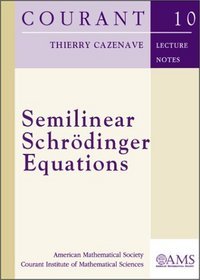
This is the book strongly recommended by Professor Tsutsumi, whom I introduced just above. His book closes with this sentence: "Finally, a book has recently come out that surveys the mathematical research up to 2002 on the nonlinear Schrödinger equations covered in this book. I encourage readers interested in nonlinear Schrödinger equations to give it a read." That's this book. It's also the one a classmate in my lab who works on the Schrödinger equation is presenting from every week in our M1 seminar. Apparently it's a tough read as well. I remember how, back in the first semester, this friend announced, "I just can't prove this one inequality. I have no idea where it comes from," and took a week off from the seminar.
6. H. Ringström. The Cauchy Problem in General Relativity. EMS.
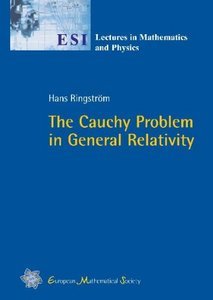
Roughly the first 100 pages cover the basics of PDEs and the functional analysis that goes with them. Then, from Part II, the real story begins, starting with Lorentzian geometry. It's one of the books I'm reading right now.
More in Topics on PDE
See all- ERA 2010 Mathematics Journal Rankings(5)
- Introduction to the Free Klein-Gordon Evolution Group
- Update: My Research on the Klein-Gordon Equation (April 13, 2013)(3)
- Graduate PDE Textbook Reviews: Partial Differential Equations Books I've Read(12)
- L^1-L^∞ Decay Estimates for the Wave Equation in Odd Dimensions
Comments 12
정말 열심히 공부하시네요. @_@
요즘 유학 준비로 멘붕이 극한까지 진행되서 정신이 많이 피폐하긴 하지만 (특히 스스로 아는 게 이렇게 없었나 하는 자괴감에 빠져있습니다 ㅜㅡ), 지원이 일단락되는대로 저도 분발해야 하겠습니다. 흐흐;;
허허 아닙니다. 현재 논문쓰기는 커녕 그저 커리큘럼 따라가기 바쁩니다. 아마 이 페이스 대로라면 석사논문 겨우 제출하고 졸업할 것 같네요..
유학 준비를 해 본 자로써 그 심정 이해합니다. 저는 무엇보다도 힘들었던 것은 전공공부 이외의 것들이었습니다. 연구계획서며, 추천서며, 어학이며 등등이요. 멘붕이 되셨다니, 힘 내시길 바랍니다. 역시 인생은 어드미션 획득의 연속이군요.
교토대 등의 지원 요강을 보고 기겁하고 (장학금 왜 이리 빡세! 센터 시험? 앍), 미국 유학에도 쩔쩔 매는 저를 보면서, Leun님이 얼마나 준비를 열심히 하고 또 고생하셨을지 눈에 선합니다. 저도 힘내시기를 빌겠습니다!
ㅎㅎ sos440님 정도라면 일본 탑대학은 무난할 겁니다. 실력이 워낙 출중하시니 필기시험이나 면접정도 통과하는 것은 무난할 것입니다. 오히려 미국 대학원 같은 경우 자신의 실력을 뽐낼 입학시험이나 면접이 없고 서류로 선발한다고 알고 있는데, 그 편이 훨씬 힘들어 보입니다. 게다가 학비가 비싸서 펀딩도 고려해야 되고.. 학점이 거의 만점에 가까운 지방대 출신의 학생이 미국 명문 대학원에 합격하는 일도 많으니까요. 어쨌든 좋은 소식 기대하겠습니다!
우왕 전공책 리뷰라니 ㅎㅎ
리뷰를 리뷰하다니
「대학원 입학 전에 석박사 논문 미리 써야지」라는 생각을 가지고 있는 한 잉여입니다.
대단하네요. 저는 한 가지 분야를 할 때 기껏해봐야 책을 2~3개정도 보는게 끝인데 (1개만 볼 때도 있습니다. ㅋㅋ)편미방 하나에 6개씩이나 보고 있나요. 그리고 잘 되가나 보네요. 저는 책 하나 끝내기도 참 버겁습니다. 이번에 Automorphic forms에 관한 책이 하나 왔는데 그거 끝내려면 ㅋㅋㅋ 언제 연구하고 석박사 논문 쓰는 걸 준비하지요. 그리고 왠지 étale cohomology에서 진도가 느리게 나가네요. ㅠ 쓰는 교재를 중간에 바꾸기도 했고 이걸 붙잡은지 1개월 반이 지났는데 아직 기초적인 것도 다 못익혔습니다. 컴퓨터로만 봐서 그런가... (컴퓨터로만 보는 것은 잘 익혀지지 않더군요. ㅠ 책 사기엔 돈이 딸리고요.)
그나저나 편미방 계산이 해석적 정수론하고 맞먹네요. 해석적 정수론만 부등식 하나에 줄이 10개씩 필요하고 그런 줄 알았는데 이것도 만만치 않군요. ㅋㅋㅋ 그리고 계산을 줄이는 것이 많은 것도요. 해석적 정수론 책도 저런 계산을 그냥 한 줄로 끝내버리는 게 많습니다. 이게 좀 심한게 Iwaniec & Kowalski같은 거. (풀면 20쪽정도 되는 계산을 3쪽만에 끝내더군요. 그 한 예로 Goldbach's conjecture을 만족하지 않는 짝수의 density가 0으로 간다는 거의 증명하고 Odd Goldbach conjecture의 증명을 하나로 묶어서 전체를 4쪽분량으로 줄인 건 좀 그랬습니다. 그 외에도 이 책은 생략신공이 좀 많습니다. 그래서 생략한 부분 계산이 잘 안되었던 부분이 좀 있었던 게 기억나는군요.)역으로 Nathanson이라는 사람이 쓴 책들은 그나마 친절하더군요.
사실 저도 제가 PDE 전공인지 부등식 전공인지 헷갈릴 때가 많습니다 OTL. 유명한 수학자 Hardy는 부등식에 대해 이런 유명한 말을 남겼죠.
"All analysts spend half their time hunter through the literature for inequalities which they want to use but cannot prove."
전공책 리뷰라니 대단하네요^^ 아직 석사 1학년인걸로 알고 있는데 정말 열심히 하나봐요~ 그에 비하면 전 지금..ㅠㅠ.. 전공이 Hyperbolic equation 쪽인거같네요^^ 주제넘게 조언을 좀 하자면 어느정도 책을 본 다음에는 논문으로 넘어가는게 낫지 않을까 싶어요. 어느정도라는게 참 애매한것이긴 한데 물론 책을 보며 여러가지 공부를 하는건 분명 나중에 공부할때 큰 도움이 되지만 결국 논문을 나중에 쓴다는건 어떤 문제를 풀어야 하는것이기 때문에 논문을 공부하는게 큰 도움이 되요. 처음부터 모든기초를 다 알고 논문을 공부한다면 이보다 더 좋을순 없겠지만 알다시피 PDE쪽은 너무 방대하게 연구가 되있어서 현실적으로 그건 불가능 하다고 생각하거든요. 예전에 아는 교수님께서 해주신 말씀인데 우리는 부등식이나 수학적 지식을 '무기'로 가지고 있고 문제라는 '적'을 만났다고 생각하면 많은 무기를 가지고 있는것도 물론 좋지만 그 적을 어떤 무기로 어떻게 쓰러트려야 하는지 '방법'을 아는것도 중요하다고 해요. 아마 논문을 조금씩 읽게 된다면 나중에 반드시 도움이 되리라 믿어요^^ 처음부터 너무 어려운걸로 시작할 필요도 없고 조급해할 필요도 없어요. 그 분야에서 아주 유명한 옛날 논문도 좋고 최근에 Review형식으로 쓴것도 좋고 그냥 천천히 읽으면 분명 도움이 될거에요.^^ 그럼 공부 열심히 하시고 새해복 많이 받아요~ 나중에 언젠가는 꼭 한번 보고싶네요
들러주셔서 감사합니다 선배님, 저번에 메일 받고 엄청 반가웠어요 ㅎㅎ. 전공이라고 하기엔 턱없이 부족하지만 뭐 일단은 hyperbolic입니다. 저도 이제 슬슬 논문으로 넘어가야 하는데, 역시 말씀하셨다시피 너무 방대하게 연구가 되어 있어서 hyperbolic중에서도 세부전공을 정하고 있는 단계라고나 할까요. 뭐 기초부족과 멘붕은 언제나 저의 친구였고요. "'방법'을 아는 것이 중요하다" 정말 와닿는 말이네요. 누추한 곳에 들르셔서 뼈와 살이 되는 조언 정말 감사드립니다. 아, 그리고 Ponce가 토호쿠에 자주 가나보네요. 최근에 게시판에서 본 기억이 납니다. 뭐 저도 선배님을 언젠가는 만날 기회가 있을 거라 믿습니다! 새해 복 많이 받으세요~
전 어디쪽으로 할지는 모르겠지만, PDE가 어느순간부터는 기본적인 언어가 되지 않을까라는 생각도 듭니다.
아마 그래서 이쪽은 지속적으로 관심을 갖게 되나봅니다.
푸앙카레 추측이 풀리는데 강력한 힘을 발휘한게 PDE이론이기도 했으니까요.
아무래도 요즘에는 순수 해석학보다는 pde같은 응용수학 전공하는 사람들이 많은 것 같습니다.