Sony CX-550 Camcorder Review After Five Years of Use (vs. Canon 70D Video)
Translated from the Korean original. Read the original →
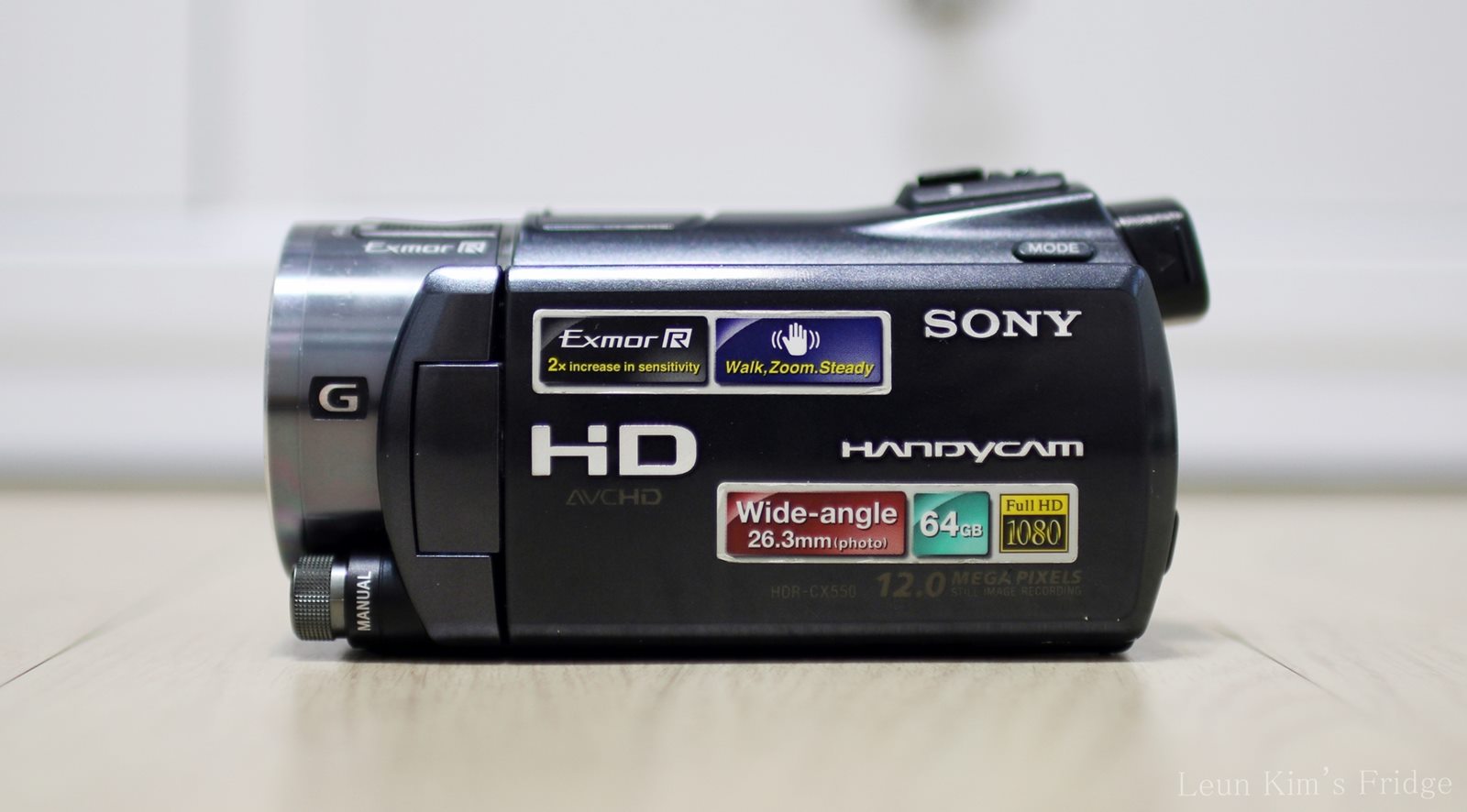

It comes with 64GB of built-in memory and shoots Full HD. When I bought it, a camcorder that did Full HD cost you a pretty penny... and now it looks like the 4K era is arriving... Anyway, even four or five years ago I never imagined DSLRs — Canon in particular — would start eating into the camcorder market (of course, beyond the consumer models, Sony still rules 4K-class and broadcast gear...). Switching back and forth between the 70D and the CX-550 these days, the biggest difference I notice is image quality. Both shoot Full HD, but the 70D has way less noise — it's not even close. Whenever I shot at night with the Sony, all I could get was a mess of noise like the clip below.
Granted, it was really dark there and I was zoomed in... But that doesn't mean camcorders are all downsides (if anything, they have quite a few upsides...). First off, since they're built for video, they handle camera shake really well. With a DSLR, the slightest hand movement makes the footage look like you've got a bad case of the shakes, while a camcorder keeps things smooth with hardly any jerkiness even when your hands wobble. With a DSLR you can fix this with extra gear like a shoulder rig or a Steadicam-style stabilizer. Something like this...
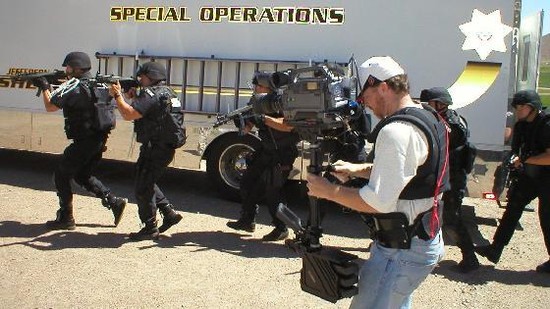
Just kidding — entry-level rigs are cheap and light. Another advantage of a camcorder is its far better built-in microphone. Even Sony's consumer camcorders support 5.1 surround and have a built-in mic that's directional to some degree (?), so the sound is usually pretty good. Directional means the mic picks up sound from where it's pointed and cuts out noise from behind or to the sides. By the way, I found out recently while on a call that Galaxy phones and iPhones have directional mics built in too... wow. Even if I'm on speakerphone while playing a game, it works like a band-reject filter and the other person can't hear the game sounds at all. A DSLR's built-in mic, on the other hand, isn't directional at all, and the sound quality itself is pretty sad... Again, you can solve this with an external mic that slides into the hot shoe. Around 200,000 won gets you a decent one.
I shot the clip above recently with the Sigma 18-35 "UFO" lens on the 70D, wide open at F1.8. Still, the biggest drawback of a camcorder is that you can't change lenses... You can't use a fast lens for that nice background blur; you're stuck with whatever lens the Handycam came with. Honestly, that's the main reason I gave up on my Handycam. The newest Handycams might come with monster lenses for all I know... but either way, you still can't swap them. Oh, and as part of a policy to protect the camcorder market, every DSLR in the world can only record up to 30 minutes per clip... (sigh). Not that it's much of a problem, though — even in filmmaking it's rare to shoot more than 30 minutes "continuously."
I saw the other day that the new iPhone 6s Plus actually supports 4K video recording (wow). It seems pretty usable in daylight or plenty of light, but when it comes to lens quality and noise at night, I bet it falls well short...
More in Camera & Lens
See all- Canon 85mm f/1.8 “Baby Mandu” on a Crop Body: Hands-On Review
- Canon PowerShot SX60 HS: A Zoom Camera Made for Spying?
- Sony CX-550 Camcorder Review After Five Years of Use (vs. Canon 70D Video)
- How to Check Your Camera's Shutter Count (Canon EOSMSG)
- Full Frame vs. Crop Sensor (APS-C) Cameras: Pros and Cons(1)
Comments 0